第 5 章 · 第 37 幕
法院和陪審團
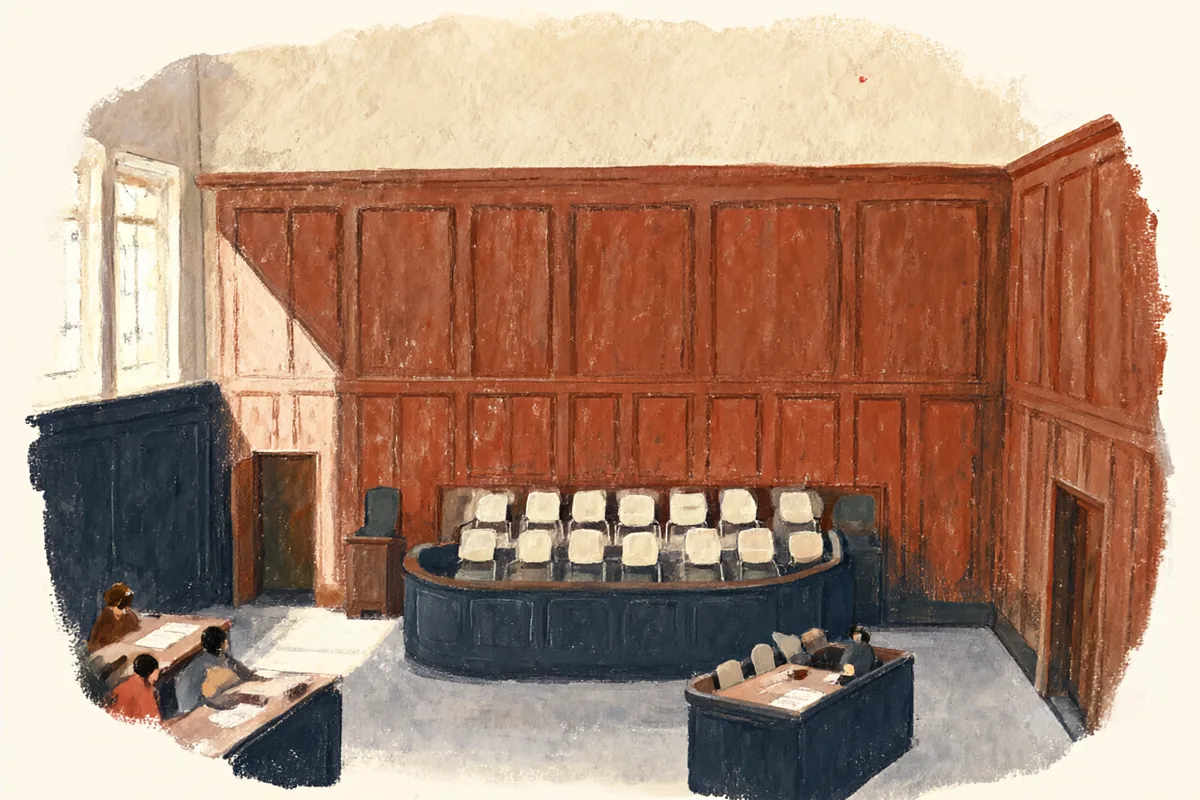
刑事法(criminal law)處理罪行,而民事法(civil law)解決個人或團體之間的糾紛。大部分輕微刑事案件交由裁判法院(Magistrates' Court)處理,在蘇格蘭則交由太平紳士法院(Justice of the Peace Court)處理。嚴重罪行在刑事法院(Crown Court)由法官和陪審團審理;在蘇格蘭,嚴重案件交由郡司法官法院(Sheriff Court)處理,由郡司法官(sheriff)單獨審理,或與陪審團一起審理。陪審團有12名成員,在蘇格蘭則有15名,從選民登記冊中隨機抽選。他們裁定「有罪」('guilty')或「無罪」('not guilty'),蘇格蘭的陪審團還可以裁定「證據不足」('not proven');而在英格蘭、威爾斯和北愛爾蘭,10至17歲的人通常到少年法庭(Youth Court)受審。注意:自2026年1月1日起,蘇格蘭的新審訊已不再使用「證據不足」裁決,但考試仍以手冊為準。
英文原文
Courts and Juries
Criminal law deals with crimes, while civil law settles disputes between people or groups. Most minor criminal cases go to a Magistrates' Court, or in Scotland a Justice of the Peace Court. Serious offences are tried by a judge and jury in a Crown Court, while in Scotland serious cases go to a Sheriff Court, with a sheriff alone or with a jury. Juries have 12 members, or 15 in Scotland, picked at random from the electoral register. They decide 'guilty' or 'not guilty', and Scottish juries may also say 'not proven', while in England, Wales and Northern Ireland people aged 10 to 17 usually go to a Youth Court. Note: since 1 January 2026, new Scottish trials no longer use 'not proven', but the test still follows the handbook.
檢驗一下
這一幕有 5 道題。你的答案會計入複習計劃。
正在載入題目…