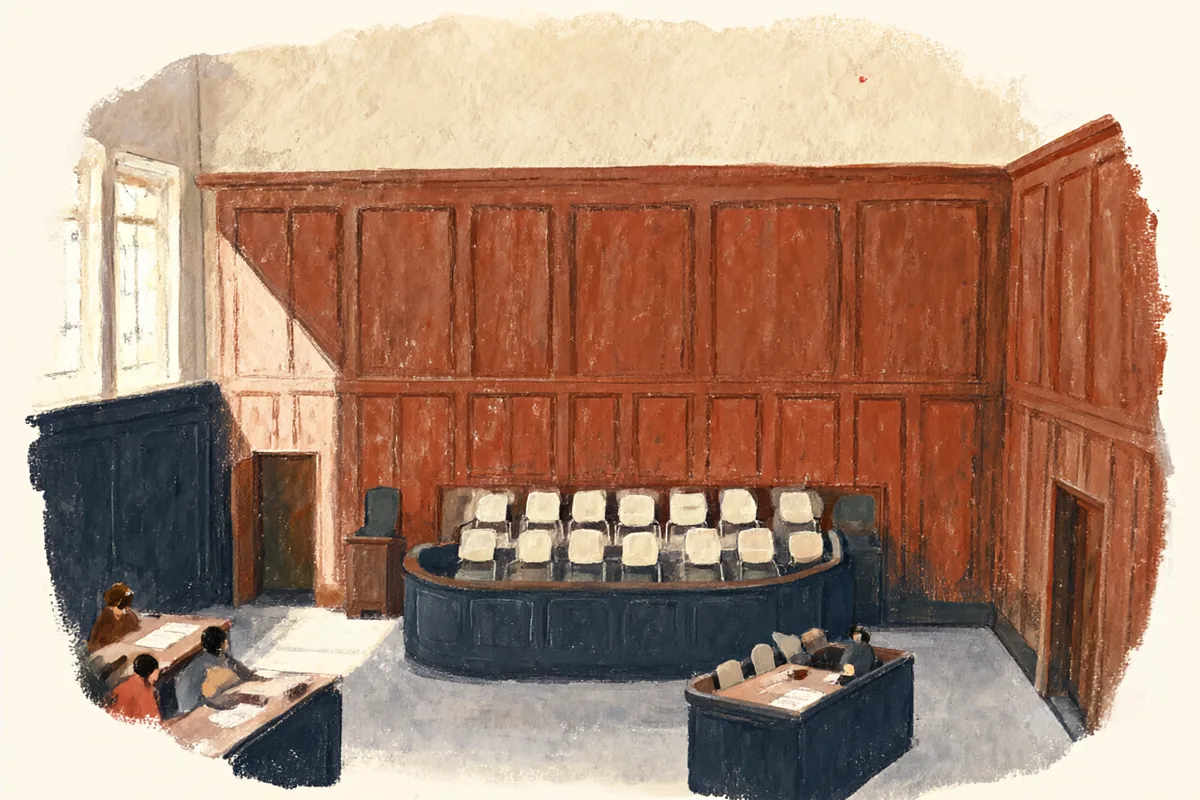
第 5 章 · 第 37 幕
法院与陪审团
刑法处理犯罪,民法则解决个人或团体之间的纠纷。大多数轻微刑事案件交由治安法院(Magistrates' Court)审理,在苏格兰(Scotland)则交由太平绅士法院(Justice of the Peace Court)审理。严重罪行在刑事法院(Crown Court)由法官和陪审团审理;而在苏格兰,严重案件交由郡法官法院(Sheriff Court)审理,由郡法官(sheriff)单独审理或与陪审团一同审理。陪审团有12名成员,在苏格兰则为15名,从选民登记册中随机选出。他们裁定“有罪”(guilty)或“无罪”(not guilty),苏格兰的陪审团还可以裁定“证据不足”('not proven');而在英格兰(England)、威尔士(Wales)和北爱尔兰(Northern Ireland),10至17岁的人通常由少年法院(Youth Court)审理。注:自2026年1月1日起,苏格兰新开审的案件已不再使用“证据不足”裁决,但考试仍以手册为准。
英文原文
Courts and Juries
Criminal law deals with crimes, while civil law settles disputes between people or groups. Most minor criminal cases go to a Magistrates' Court, or in Scotland a Justice of the Peace Court. Serious offences are tried by a judge and jury in a Crown Court, while in Scotland serious cases go to a Sheriff Court, with a sheriff alone or with a jury. Juries have 12 members, or 15 in Scotland, picked at random from the electoral register. They decide 'guilty' or 'not guilty', and Scottish juries may also say 'not proven', while in England, Wales and Northern Ireland people aged 10 to 17 usually go to a Youth Court. Note: since 1 January 2026, new Scottish trials no longer use 'not proven', but the test still follows the handbook.
检验一下
这一幕有 5 道题。你的答案会计入复习计划。
正在加载题目…