باب 3 · منظر 5
1066 اور ڈومز ڈے بک
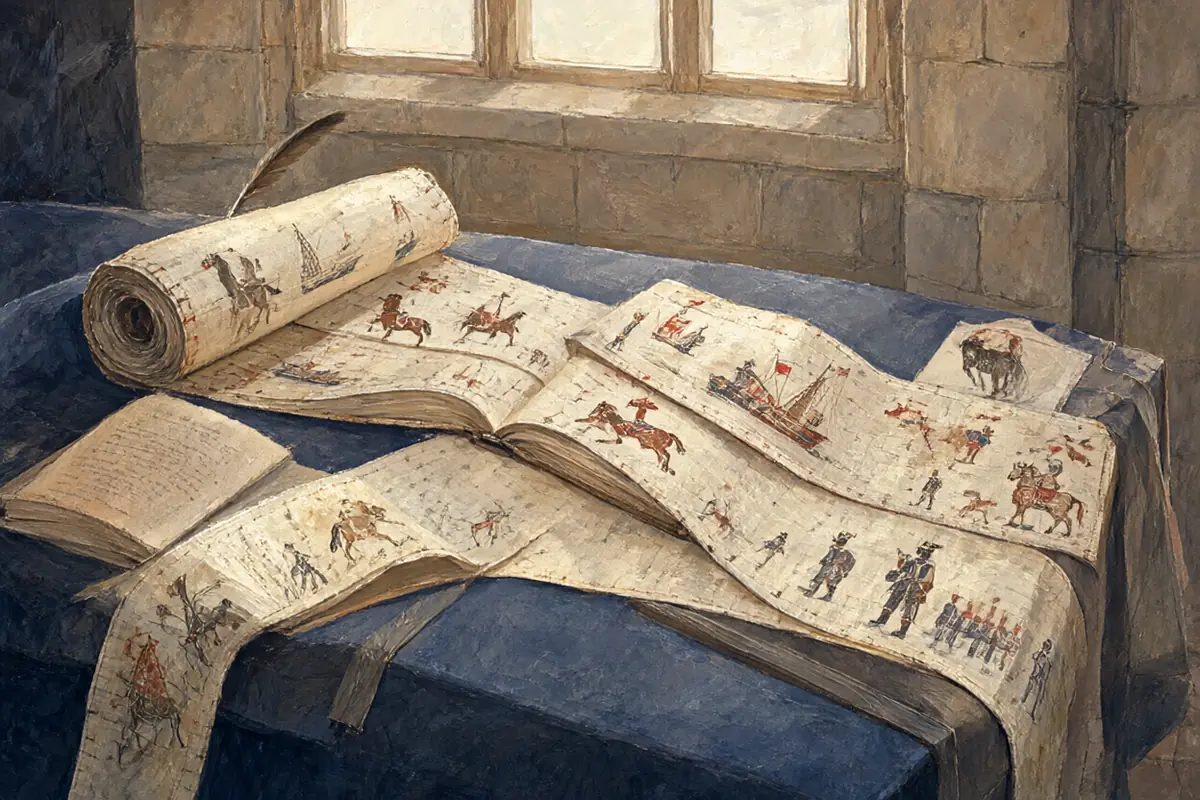
1066 میں نارمنڈی کا ڈیوک ولیم (William of Normandy) شمالی فرانس (France) سے پار آیا اور جنگِ ہیسٹنگز (Battle of Hastings) میں سیکسن (Saxon) بادشاہ ہیرلڈ (Harold) کو شکست دی، جہاں ہیرلڈ مارا گیا۔ ولیم فاتح (William the Conqueror) نے تخت سنبھالا، اور بایو ٹیپسٹری (Bayeux Tapestry)، جو آج بھی فرانس میں دیکھی جا سکتی ہے، کڑھائی کے ذریعے یہ کہانی سناتی ہے۔ یہ انگلینڈ (England) پر آخری کامیاب غیر ملکی حملہ تھا، اور نئے حکمرانوں کی بولی جانے والی نارمن فرانسیسی (Norman French) نے جدید انگریزی کی تشکیل میں مدد دی۔ ولیم نے پورے انگلینڈ میں لوگ بھیجے تاکہ ہر قصبے اور گاؤں، اس کے لوگوں، اس کے زمینداروں اور ان کے جانوروں کا ریکارڈ بنایا جائے، اور اس کا نتیجہ، ڈومز ڈے بک (Domesday Book)، آج بھی موجود ہے۔
انگریزی اصل
1066 and the Domesday Book
In 1066 William, Duke of Normandy, crossed from northern France and defeated the Saxon king Harold at the Battle of Hastings, where Harold was killed. William the Conqueror took the throne, and the Bayeux Tapestry, which can still be seen in France, tells the story in embroidery. It was the last successful foreign invasion of England, and Norman French, spoken by the new rulers, helped to shape modern English. William also sent people all over England to record every town and village, its people, its landowners and their animals, and the result, the Domesday Book, still exists.
خود کو جانچیں
اس منظر پر سوالات: 5۔ آپ کے جوابات آپ کے دہرائی کے منصوبے میں شامل ہوتے ہیں۔
سوالات لوڈ ہو رہے ہیں…