ਅਧਿਆਇ 3 · ਦ੍ਰਿਸ਼ 5
1066 ਅਤੇ ਡੂਮਜ਼ਡੇ ਬੁੱਕ
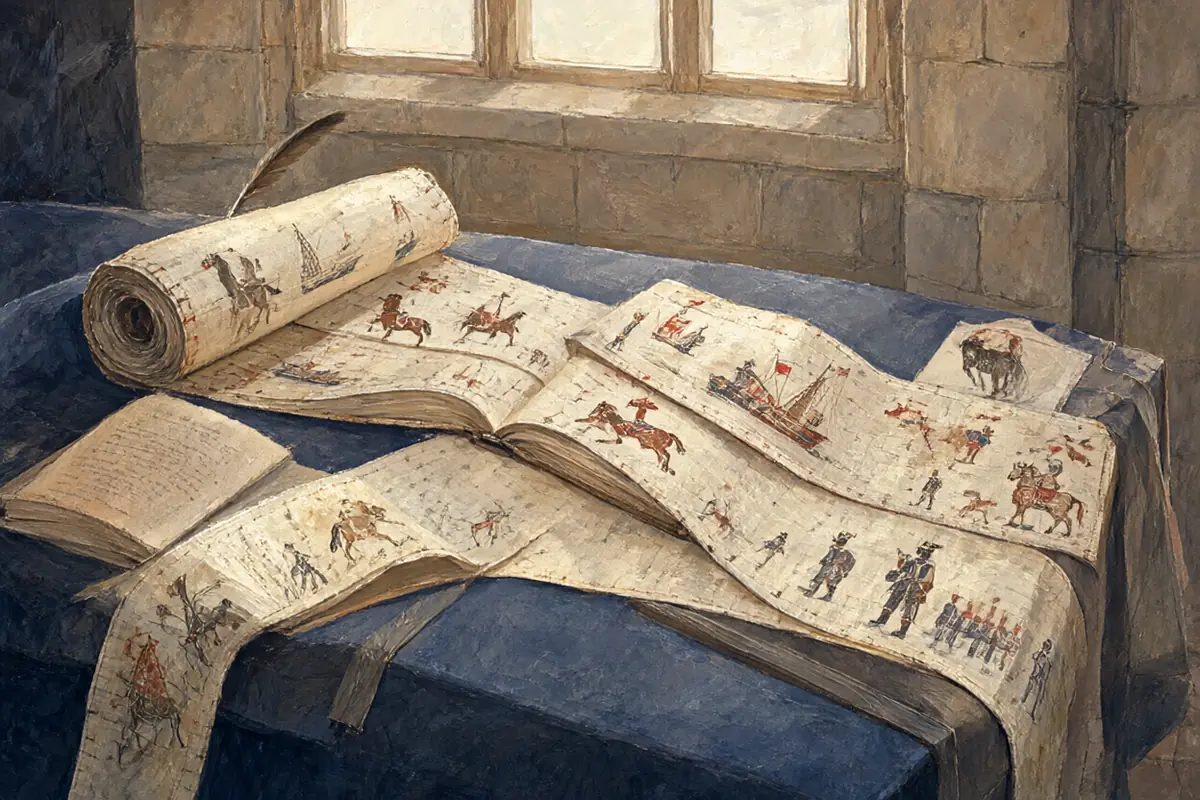
1066 ਵਿੱਚ ਨੌਰਮੈਂਡੀ ਦਾ ਡਿਊਕ ਵਿਲੀਅਮ (William, Duke of Normandy) ਉੱਤਰੀ ਫਰਾਂਸ (France) ਤੋਂ ਪਾਰ ਆਇਆ ਅਤੇ ਹੇਸਟਿੰਗਜ਼ ਦੀ ਲੜਾਈ (Battle of Hastings) ਵਿੱਚ ਸੈਕਸਨ (Saxon) ਰਾਜੇ ਹੈਰਲਡ (Harold) ਨੂੰ ਹਰਾਇਆ, ਜਿੱਥੇ ਹੈਰਲਡ ਮਾਰਿਆ ਗਿਆ। ਵਿਲੀਅਮ ਜੇਤੂ (William the Conqueror) ਨੇ ਗੱਦੀ ਸੰਭਾਲੀ, ਅਤੇ ਬਾਯੂ ਟੇਪੇਸਟਰੀ (Bayeux Tapestry), ਜੋ ਅੱਜ ਵੀ ਫਰਾਂਸ ਵਿੱਚ ਦੇਖੀ ਜਾ ਸਕਦੀ ਹੈ, ਕਢਾਈ ਰਾਹੀਂ ਇਹ ਕਹਾਣੀ ਦੱਸਦੀ ਹੈ। ਇਹ ਇੰਗਲੈਂਡ (England) ਉੱਤੇ ਆਖ਼ਰੀ ਸਫਲ ਵਿਦੇਸ਼ੀ ਹਮਲਾ ਸੀ, ਅਤੇ ਨਵੇਂ ਸ਼ਾਸਕਾਂ ਦੀ ਬੋਲੀ ਨੌਰਮਨ ਫਰਾਂਸੀਸੀ (Norman French) ਨੇ ਆਧੁਨਿਕ ਅੰਗਰੇਜ਼ੀ ਨੂੰ ਘੜਨ ਵਿੱਚ ਮਦਦ ਕੀਤੀ। ਵਿਲੀਅਮ ਨੇ ਪੂਰੇ ਇੰਗਲੈਂਡ ਵਿੱਚ ਲੋਕ ਭੇਜੇ, ਤਾਂ ਜੋ ਹਰ ਸ਼ਹਿਰ ਅਤੇ ਪਿੰਡ, ਉਸ ਦੇ ਲੋਕਾਂ, ਜ਼ਮੀਨ-ਮਾਲਕਾਂ ਅਤੇ ਉਨ੍ਹਾਂ ਦੇ ਪਸ਼ੂਆਂ ਦਾ ਰਿਕਾਰਡ ਬਣਾਇਆ ਜਾ ਸਕੇ, ਅਤੇ ਇਸ ਦਾ ਨਤੀਜਾ, ਡੂਮਜ਼ਡੇ ਬੁੱਕ (Domesday Book), ਅੱਜ ਵੀ ਮੌਜੂਦ ਹੈ।
ਅੰਗਰੇਜ਼ੀ ਮੂਲ
1066 and the Domesday Book
In 1066 William, Duke of Normandy, crossed from northern France and defeated the Saxon king Harold at the Battle of Hastings, where Harold was killed. William the Conqueror took the throne, and the Bayeux Tapestry, which can still be seen in France, tells the story in embroidery. It was the last successful foreign invasion of England, and Norman French, spoken by the new rulers, helped to shape modern English. William also sent people all over England to record every town and village, its people, its landowners and their animals, and the result, the Domesday Book, still exists.
ਆਪਣੇ-ਆਪ ਨੂੰ ਪਰਖੋ
ਇਸ ਦ੍ਰਿਸ਼ ਬਾਰੇ ਸਵਾਲ: 5। ਤੁਹਾਡੇ ਜਵਾਬ ਤੁਹਾਡੀ ਦੁਹਰਾਈ ਯੋਜਨਾ ਵਿੱਚ ਜਾਂਦੇ ਹਨ।
ਸਵਾਲ ਲੋਡ ਹੋ ਰਹੇ ਹਨ…