باب 3 · منظر 3
جہاز، ولی اور سیکسن
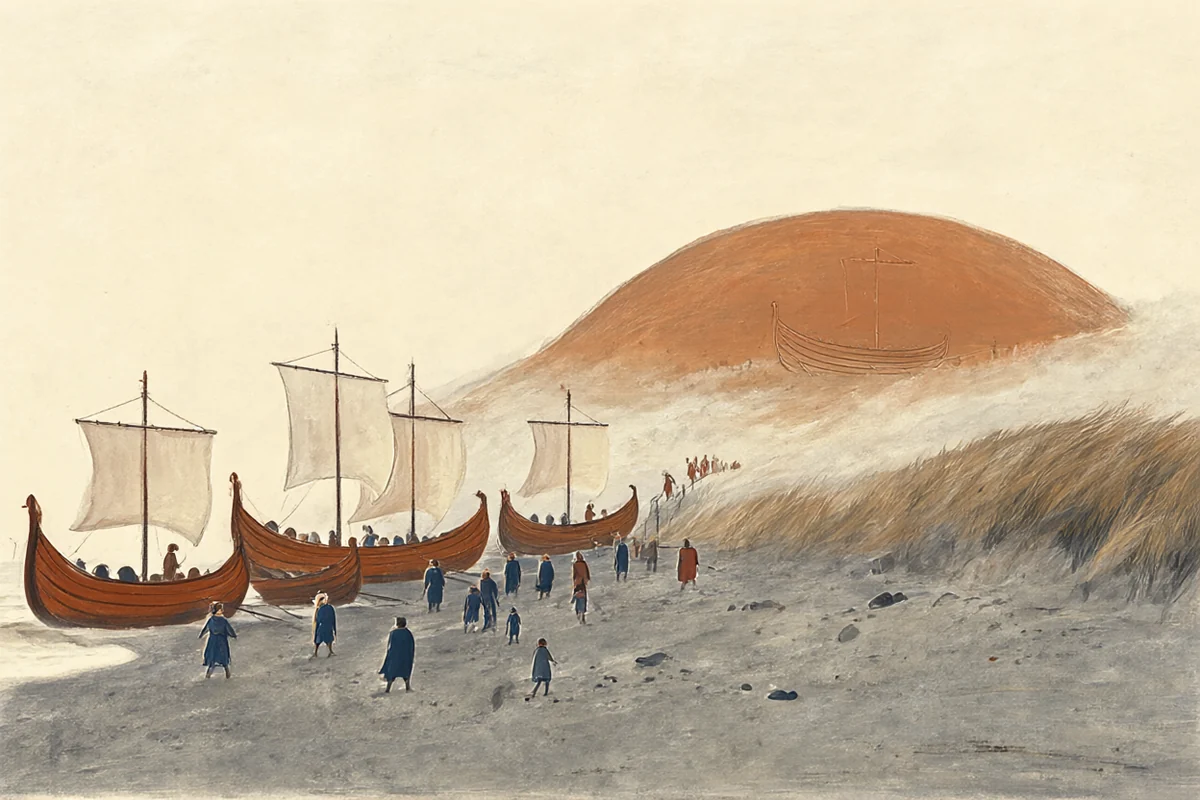
جب رومی فوج 410 عیسوی میں کبھی واپس نہ آنے کے لیے چلی گئی تو شمالی یورپ (northern Europe) سے نئے حملہ آور سمندر پار کر کے آئے: جیوٹ (Jutes)، اینگل (Angles) اور سیکسن (Saxons)۔ ان کی زبانوں سے وہ انگریزی بنی جو ہم آج بولتے ہیں، اور تقریباً 600 عیسوی تک ان کی بادشاہتیں آج کے انگلینڈ (England) کے بڑے حصے پر پھیل چکی تھیں۔ سفوک (Suffolk) میں سٹن ہو (Sutton Hoo) کے مقام پر ایک بادشاہ کو خزانے اور زرہ بکتر کے ساتھ ایک جہاز میں لٹایا گیا اور پھر مٹی کے ایک ٹیلے کے نیچے دفن کیا گیا۔ مبلغین مسیحیت (Christianity) لائے۔ سینٹ پیٹرک (St Patrick) اور سینٹ کولمبا (St Columba) نے شمال میں کام کیا، جبکہ سینٹ آگسٹین (St Augustine) روم (Rome) سے آئے اور کینٹربری کے پہلے آرچ بشپ (Archbishop of Canterbury) بنے۔
انگریزی اصل
Ships, Saints and Saxons
When the Roman army left in AD 410, never to come back, new invaders sailed in from northern Europe: the Jutes, the Angles and the Saxons. Their languages grew into the English we speak today, and by about AD 600 their kingdoms covered much of what is now England. At Sutton Hoo in Suffolk, one king was laid in a ship with treasure and armour, then buried under a mound of earth. Missionaries brought Christianity. St Patrick and St Columba worked in the north, while St Augustine came from Rome and became the first Archbishop of Canterbury.
خود کو جانچیں
اس منظر پر سوالات: 4۔ آپ کے جوابات آپ کے دہرائی کے منصوبے میں شامل ہوتے ہیں۔
سوالات لوڈ ہو رہے ہیں…