Capítulo 3 · Cena 3
Navios, santos e saxões
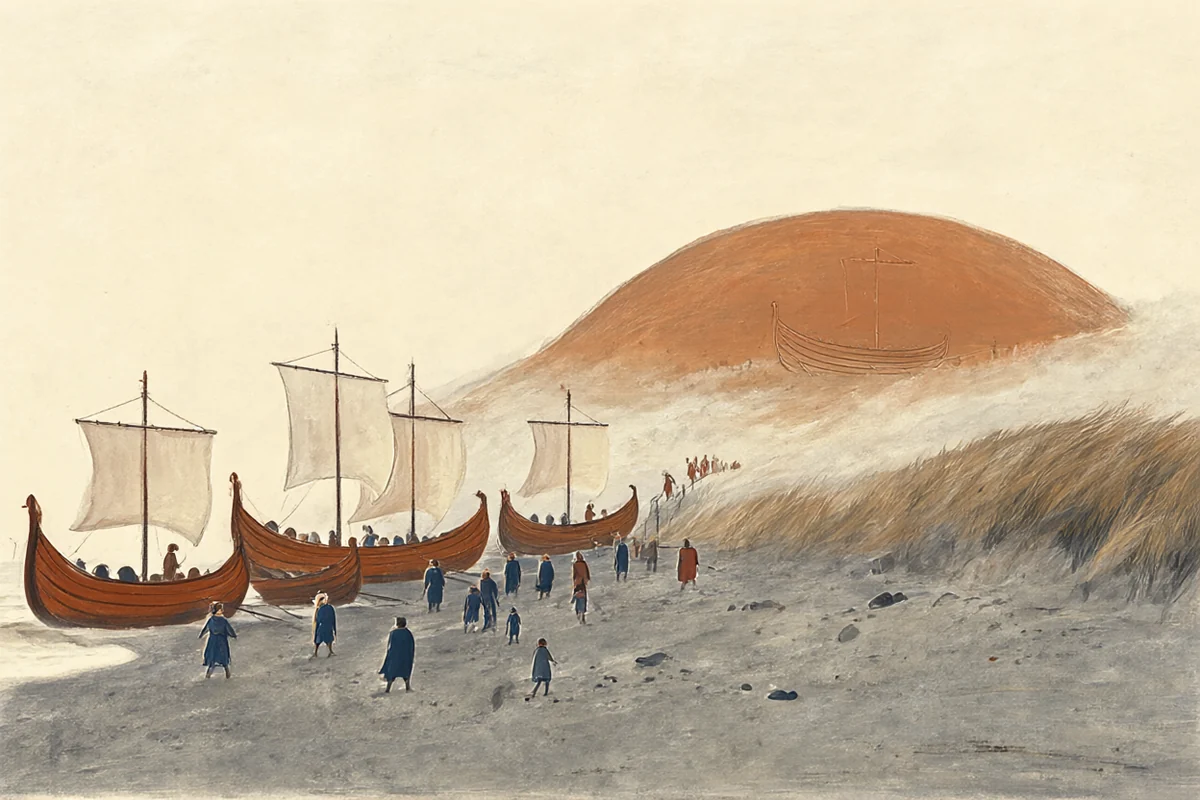
Quando o exército romano partiu, em 410 d.C., para nunca mais voltar, chegaram por mar novos invasores do norte da Europa: os jutos (Jutes), os anglos (Angles) e os saxões (Saxons). As suas línguas deram origem ao inglês que hoje falamos, e por volta de 600 d.C. os seus reinos cobriam grande parte do que é hoje Inglaterra (England). Em Sutton Hoo, no Suffolk, um rei foi deitado num barco com tesouros e armaduras e depois enterrado debaixo de um monte de terra. Os missionários trouxeram o cristianismo. São Patrício (St Patrick) e São Columba (St Columba) trabalharam no norte, enquanto Santo Agostinho (St Augustine) veio de Roma (Rome) e se tornou o primeiro arcebispo de Cantuária (Archbishop of Canterbury).
Original em inglês
Ships, Saints and Saxons
When the Roman army left in AD 410, never to come back, new invaders sailed in from northern Europe: the Jutes, the Angles and the Saxons. Their languages grew into the English we speak today, and by about AD 600 their kingdoms covered much of what is now England. At Sutton Hoo in Suffolk, one king was laid in a ship with treasure and armour, then buried under a mound of earth. Missionaries brought Christianity. St Patrick and St Columba worked in the north, while St Augustine came from Rome and became the first Archbishop of Canterbury.
Teste-se
Perguntas sobre esta cena: 4. As suas respostas entram no seu plano de revisão.
A carregar as perguntas…