Capítulo 3 · Cena 17
A longa luta pelo voto
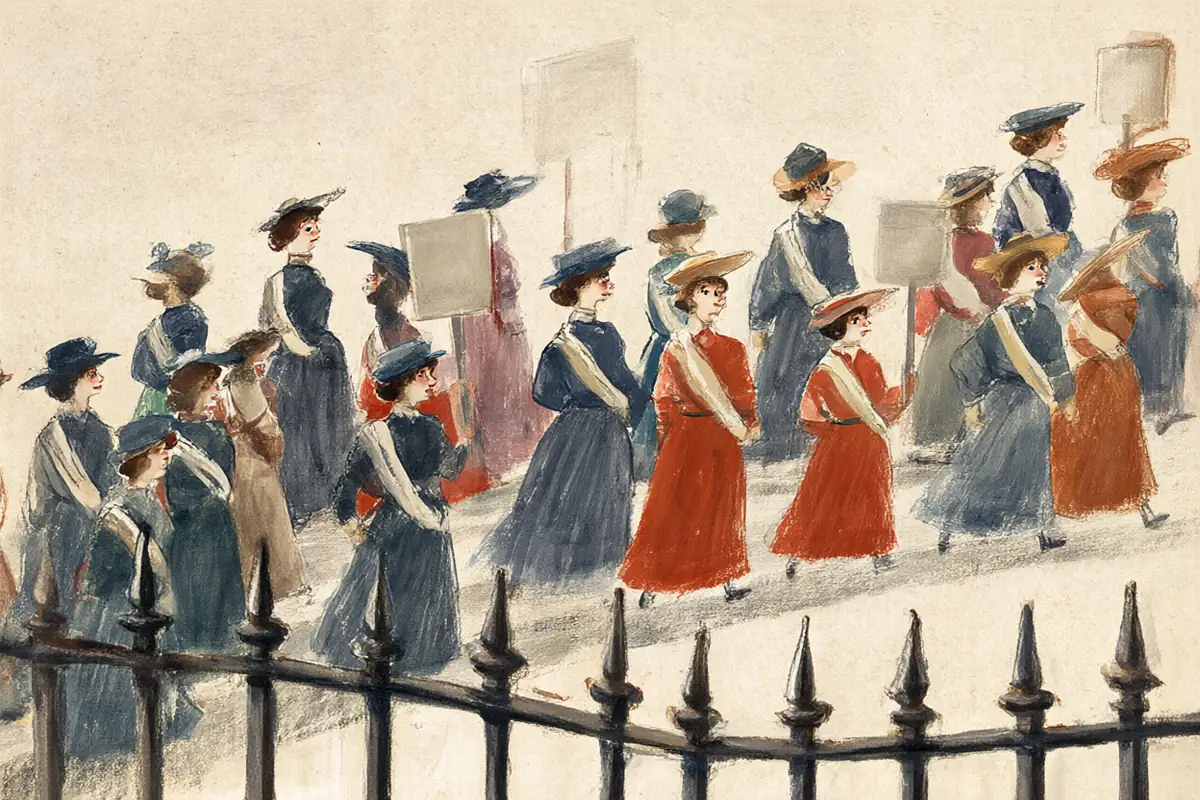
À medida que as cidades industriais enriqueciam, as suas classes médias queriam mais poder político. A Lei da Reforma (Reform Act) de 1832 deu o direito de voto a muitas mais pessoas, mas o voto continuava a depender da posse de propriedade. Os cartistas (Chartists) enviaram petições ao Parlamento (Parliament) em nome dos trabalhadores, e uma segunda Lei da Reforma chegou em 1867, mas a maioria dos homens e todas as mulheres continuavam sem poder votar. Emmeline Pankhurst, nascida em Manchester, ajudou a fundar a Women's Social and Political Union em 1903, e as suas sufragistas (suffragettes) acorrentaram-se a grades e fizeram greve de fome. As mulheres com mais de 30 anos ganharam o direito de voto em 1918 e, em 1928, as mulheres passaram a poder votar aos 21 anos, tal como os homens.
Original em inglês
The Long Fight for the Vote
As the industrial towns grew rich, their middle classes wanted more political power. The Reform Act of 1832 gave many more people the vote, but voting still depended on owning property. The Chartists sent petitions to Parliament for working people, and a second Reform Act came in 1867, yet most men and all women still could not vote. Emmeline Pankhurst, born in Manchester, helped found the Women's Social and Political Union in 1903, and its suffragettes chained themselves to railings and went on hunger strike. Women over 30 won the vote in 1918, and in 1928 women could vote at 21, like men.
Teste-se
Perguntas sobre esta cena: 5. As suas respostas entram no seu plano de revisão.
A carregar as perguntas…