Rozdział 3 · Scena 12
Król przeciw Parlamentowi
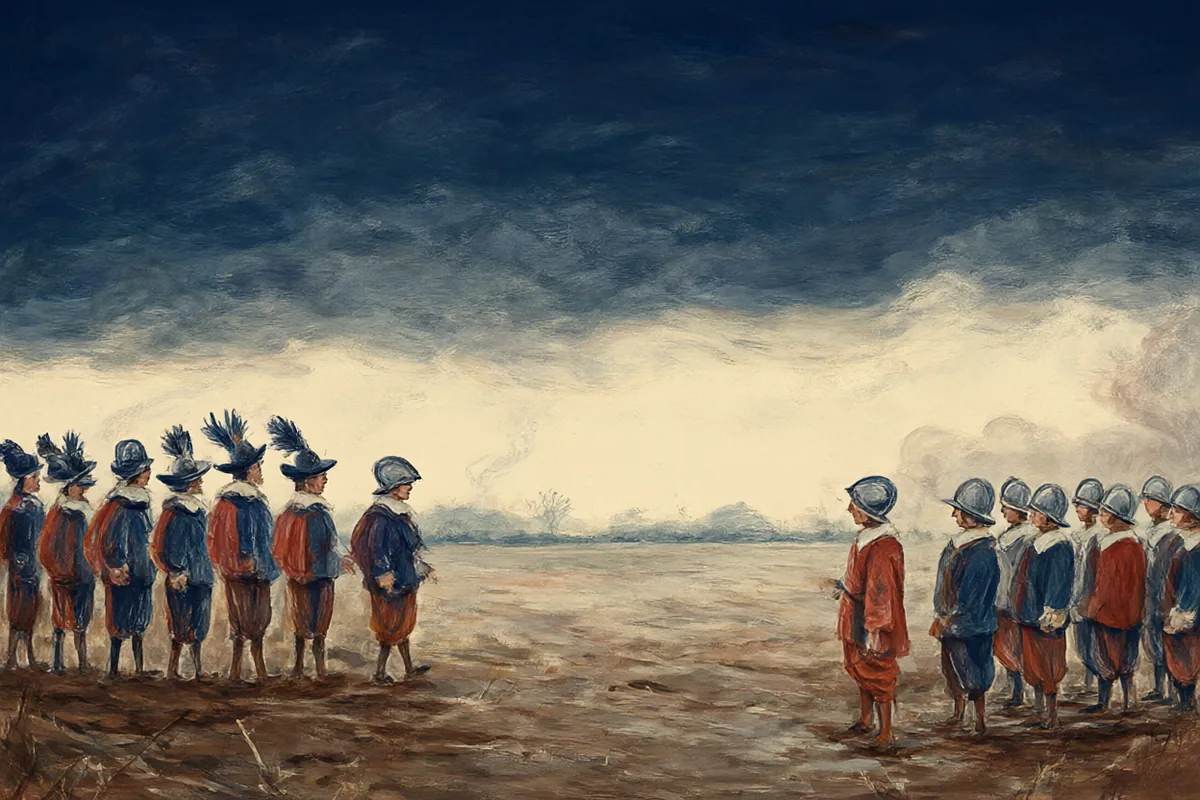
Karol I (Charles I) wierzył w boskie prawo królów (Divine Right of Kings): że wybrał go Bóg, więc może rządzić bez zgody Parlamentu (Parliament). Kiedyś wszedł do Izby Gmin (House of Commons), by aresztować pięciu jej przywódców, ale zostali ostrzeżeni, i od tego czasu żaden monarcha tam nie wszedł. W 1642 roku wybuchła wojna domowa między kawalerami (Cavaliers), którzy popierali króla, a okrągłogłowymi (Roundheads), którzy popierali Parlament. Po klęskach pod Marston Moor i Naseby Karola stracono w 1649 roku. Anglia (England) stała się republiką zwaną Wspólnotą Anglii (Commonwealth), a Oliver Cromwell rządził jako Lord Protektor (Lord Protector) aż do śmierci w 1658 roku.
Angielski oryginał
King Against Parliament
Charles I believed in the Divine Right of Kings: that God had chosen him, so he could rule without Parliament's approval. He once entered the House of Commons to arrest five of its leaders, but they had been warned, and no monarch has set foot there since. In 1642 civil war began between the Cavaliers, who backed the king, and the Roundheads, who backed Parliament. After defeats at Marston Moor and Naseby, Charles was executed in 1649. England became a republic called the Commonwealth, and Oliver Cromwell ruled as Lord Protector until his death in 1658.
Sprawdź się
Pytania do tej sceny: 5. Twoje odpowiedzi trafiają do planu powtórek.
Wczytywanie pytań…