Rozdział 3 · Scena 13
Dżuma, pożar i chwalebna rewolucja
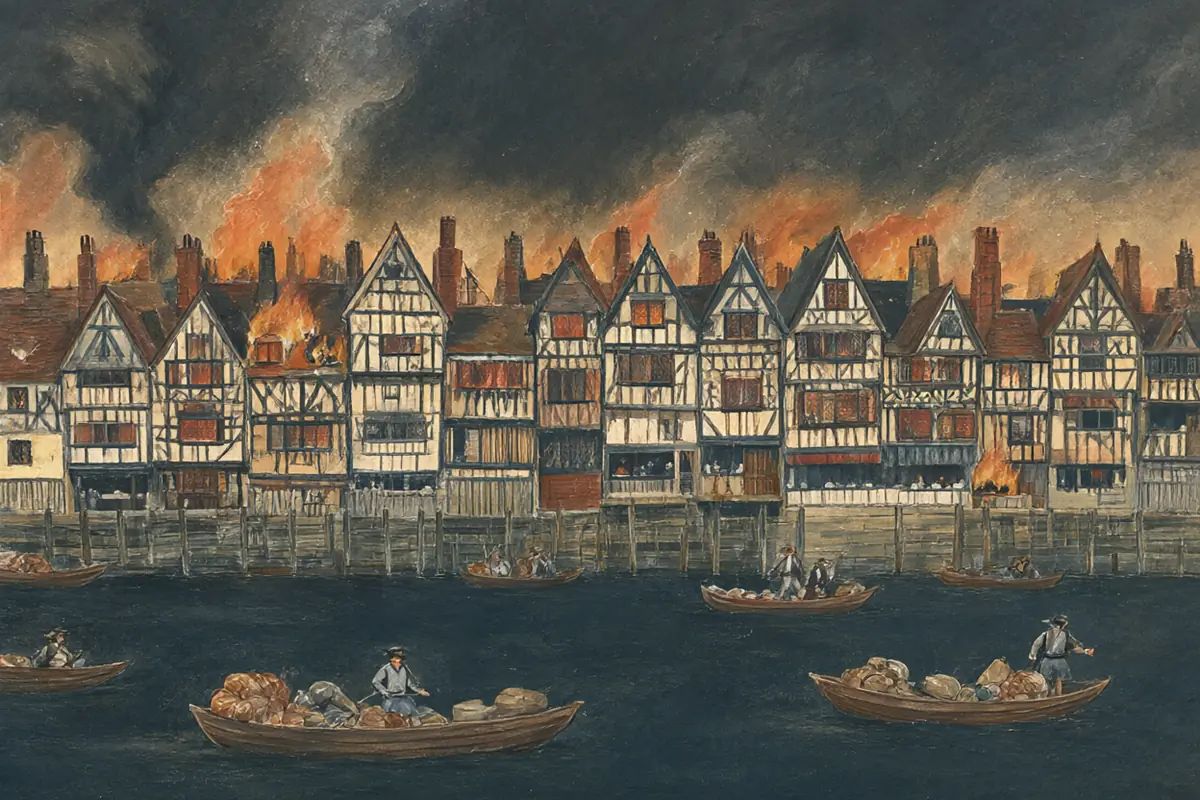
W 1660 roku Parlament (Parliament) zaprosił Karola II (Charles II) z powrotem z wygnania w Niderlandach (Netherlands) i Karol został koronowany. W 1665 roku dżuma zabiła tysiące londyńczyków, a w następnym roku wielki pożar zniszczył dużą część miasta, w tym katedrę św. Pawła (St Paul's Cathedral). Sir Christopher Wren zaprojektował nową katedrę św. Pawła, a Samuel Pepys opisał te wydarzenia w swoim dzienniku. W 1679 roku ustawa Habeas Corpus (Habeas Corpus Act) zagwarantowała każdemu więźniowi prawo do rozprawy przed sądem. W 1688 roku czołowi protestanci zaprosili Wilhelma Orańskiego (William of Orange), by przejął tron od katolika Jakuba II (James II). Ponieważ w Anglii (England) nie było walk, nazwano to chwalebną rewolucją (Glorious Revolution).
Angielski oryginał
Plague, Fire and a Glorious Revolution
In 1660 Parliament invited Charles II back from exile in the Netherlands, and he was crowned. In 1665 plague killed thousands of Londoners, and the next year a great fire destroyed much of the city, including St Paul's Cathedral. Sir Christopher Wren designed the new St Paul's, and Samuel Pepys recorded these events in his diary. In 1679 the Habeas Corpus Act guaranteed every prisoner the right to a court hearing. In 1688 leading Protestants invited William of Orange to take the throne from the Catholic James II, and because there was no fighting in England, it became the Glorious Revolution.
Sprawdź się
Pytania do tej sceny: 5. Twoje odpowiedzi trafiają do planu powtórek.
Wczytywanie pytań…