ਅਧਿਆਇ 3 · ਦ੍ਰਿਸ਼ 1
ਪੱਥਰ, ਕਾਂਸੀ ਅਤੇ ਪਹਾੜੀ ਕਿਲ੍ਹੇ
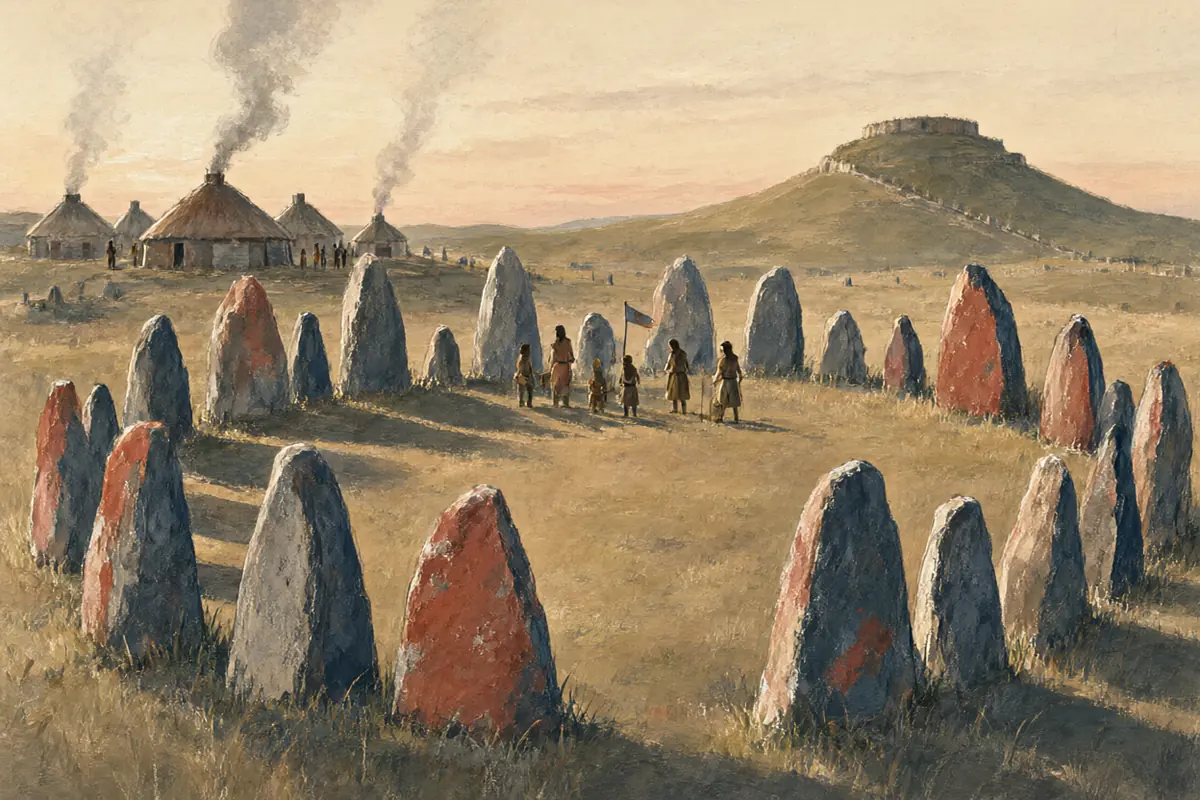
ਬਹੁਤ ਸਮਾਂ ਪਹਿਲਾਂ ਬਰਤਾਨੀਆ (Britain) ਜ਼ਮੀਨ ਰਾਹੀਂ ਯੂਰਪ ਮਹਾਂਦੀਪ ਨਾਲ ਜੁੜਿਆ ਹੋਇਆ ਸੀ, ਅਤੇ ਪੱਥਰ ਯੁੱਗ (Stone Age) ਦੇ ਸ਼ਿਕਾਰੀ-ਸੰਗ੍ਰਹਿਕਰਤਾ (hunter-gatherers) ਹਿਰਨਾਂ ਅਤੇ ਘੋੜਿਆਂ ਦੇ ਝੁੰਡਾਂ ਦੇ ਪਿੱਛੇ-ਪਿੱਛੇ ਇਸ ਦੇ ਆਰ-ਪਾਰ ਘੁੰਮਦੇ ਸਨ। ਲਗਭਗ 10,000 ਸਾਲ ਪਹਿਲਾਂ ਸਮੁੰਦਰ ਨੇ ਇਸ ਟਾਪੂ ਨੂੰ ਹਮੇਸ਼ਾ ਲਈ ਵੱਖ ਕਰ ਦਿੱਤਾ। 6,000 ਸਾਲ ਪਹਿਲਾਂ ਕਿਸਾਨ ਆਏ ਅਤੇ ਉਨ੍ਹਾਂ ਨੇ ਵਿਲਟਸ਼ਾਇਰ (Wiltshire) ਵਿੱਚ ਸਟੋਨਹੈਂਜ (Stonehenge) ਵਰਗੇ ਸਮਾਰਕ ਖੜ੍ਹੇ ਕੀਤੇ, ਜੋ ਸ਼ਾਇਦ ਮੌਸਮੀ ਰਸਮਾਂ ਲਈ ਇਕੱਠੇ ਹੋਣ ਦੀ ਥਾਂ ਸੀ। ਬਾਅਦ ਵਿੱਚ ਕਾਂਸੀ ਯੁੱਗ (Bronze Age) ਦੇ ਲੋਕਾਂ ਨੇ ਕਾਂਸੀ ਅਤੇ ਸੋਨੇ ਤੋਂ ਵਧੀਆ ਸੰਦ ਅਤੇ ਗਹਿਣੇ ਬਣਾਏ। ਲੋਹ ਯੁੱਗ (Iron Age) ਦੇ ਭਾਈਚਾਰੇ ਡੋਰਸੈੱਟ (Dorset) ਦੇ ਮੇਡਨ ਕਾਸਲ (Maiden Castle) ਵਰਗੇ ਪਹਾੜੀ ਕਿਲ੍ਹਿਆਂ ਦੀ ਰਾਖੀ ਕਰਦੇ ਸਨ, ਕੈਲਟਿਕ (Celtic) ਭਾਸ਼ਾਵਾਂ ਬੋਲਦੇ ਸਨ, ਅਤੇ ਉਨ੍ਹਾਂ ਨੇ ਬਰਤਾਨੀਆ ਵਿੱਚ ਪਹਿਲੀ ਵਾਰ ਸਿੱਕੇ ਬਣਾਏ।
ਅੰਗਰੇਜ਼ੀ ਮੂਲ
Stones, Bronze and Hill Forts
Long ago, Britain was joined to the continent by land, and Stone Age hunter-gatherers moved across it, following herds of deer and horses. The sea cut the island off for good around 10,000 years ago. Farmers arrived 6,000 years ago and raised monuments such as Stonehenge in Wiltshire, probably a meeting place for seasonal ceremonies. Later, Bronze Age people crafted fine tools and ornaments from bronze and gold. Iron Age communities defended hill forts like Maiden Castle in Dorset, spoke Celtic languages and made the first coins ever minted in Britain.
ਆਪਣੇ-ਆਪ ਨੂੰ ਪਰਖੋ
ਇਸ ਦ੍ਰਿਸ਼ ਬਾਰੇ ਸਵਾਲ: 5। ਤੁਹਾਡੇ ਜਵਾਬ ਤੁਹਾਡੀ ਦੁਹਰਾਈ ਯੋਜਨਾ ਵਿੱਚ ਜਾਂਦੇ ਹਨ।
ਸਵਾਲ ਲੋਡ ਹੋ ਰਹੇ ਹਨ…